Culture
How to watch the big waves at Nazaré
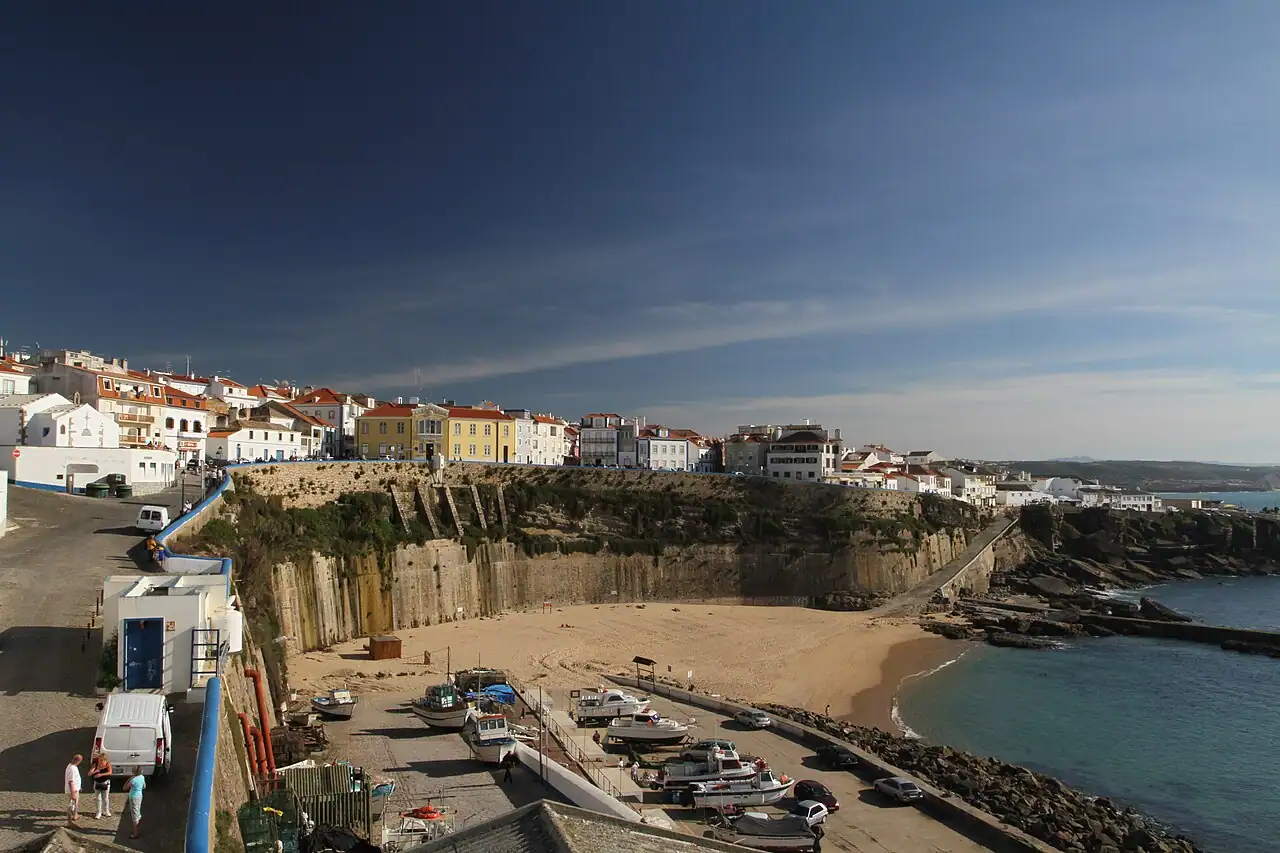
Why the waves are so big, the records, where to stand, when the giant swells actually come, how to know a day is on, and how to get there.
Nazaré's giant waves are real, but they are not a scheduled show. Some winters have a dozen huge days, some have three, and the biggest sessions are called by the tow teams with a day or two of notice. Plan around that.
Why Nazaré
An undersea canyon runs almost to the shore here and focuses Atlantic swell onto Praia do Norte, on the north side of the headland. On the same day, the waves there can be several times the size of the rest of the coast.
The records
Garrett McNamara rode a wave here in 2011 that was measured at 78 ft, and it put Nazaré on the map. Maya Gabeira holds the women's record, 22.4 m (about 73 ft), from February 2020. Sebastian Steudtner holds the Guinness men's record at 26.21 m (86 ft), from October 2020, and a February 2024 ride of about 28.5 m was still awaiting official confirmation when we last checked. Measuring a wave is hard and records get contested, so treat the numbers as a guide.
The contest
The WSL ran its first big-wave event at Nazaré in the winter of 2016-17, and since 2019-20 it has been a tow-in contest for teams of two. In recent winters the TUDOR Nazaré Big Wave Challenge has been decided on a single called day: 18 February 2025 and 13 December 2025. The 2025/26 window ran from 1 November 2025 to 31 March 2026, and the contest only runs when a big enough swell lines up. See the current Nazaré big-wave window for this winter.
Where to watch
The Forte de São Miguel Arcanjo, the fort by the lighthouse on the headland, is the spot. It sits directly above Praia do Norte and gives the clean side-on view you have seen in every photo, with the surfers and jet skis in frame. There is a small charge to go inside and the opening hours change with the season (winter hours have been 10:00 to 18:00, last entry 17:30), so check before you go. The Sítio clifftop viewpoint above town is a wider, more distant option. Do not stand low on Praia do Norte itself: the shorebreak and rogue waves there have hurt people badly.
Getting there
From Lisbon the bus is the practical option, about 1h 25m to 1h 45m on Rede Expressos or FlixBus depending on the service. The departure station differs by operator (Sete Rios or Oriente), so check when you book. There is no direct train: the nearest station, Valado, is around 6 km from town, so you need a local bus or a taxi for the last stretch. A car is easier on a called day, but the car parks by the fort fill early.
When
Big-wave season runs October to March, with the most extraordinary days usually falling November to February. There is no way to guarantee a giant day on a given trip; you improve your odds by going in that window and watching the forecast.
How to know it is on
A large, long-period north-west swell in the forecast, ideally with a light east wind. The WSL calls the TUDOR Nazaré Big Wave Challenge on 24 to 48 hours notice when it lines up, and local webcams and social accounts light up when the tow teams launch. If a contest or a big free session is called, that is your signal.
On the day
Arrive early, around 8am, for a viewing position. Bring binoculars or a long lens; even from the fort the waves are further away than they look on TV. Dress for wind and spray. The car parks by the fort fill fast on a called day, so consider walking, or taking the funicular up from the beach to Sítio and walking across.
Spots in this guide

On while you go
Silver Coast 30 Oct – 1 Nov
Bom Petisco Peniche Pro
The closing stage of the Liga MEO Surf, Portugal's national First Division circuit, held at Supertubos.
Supertubos, Peniche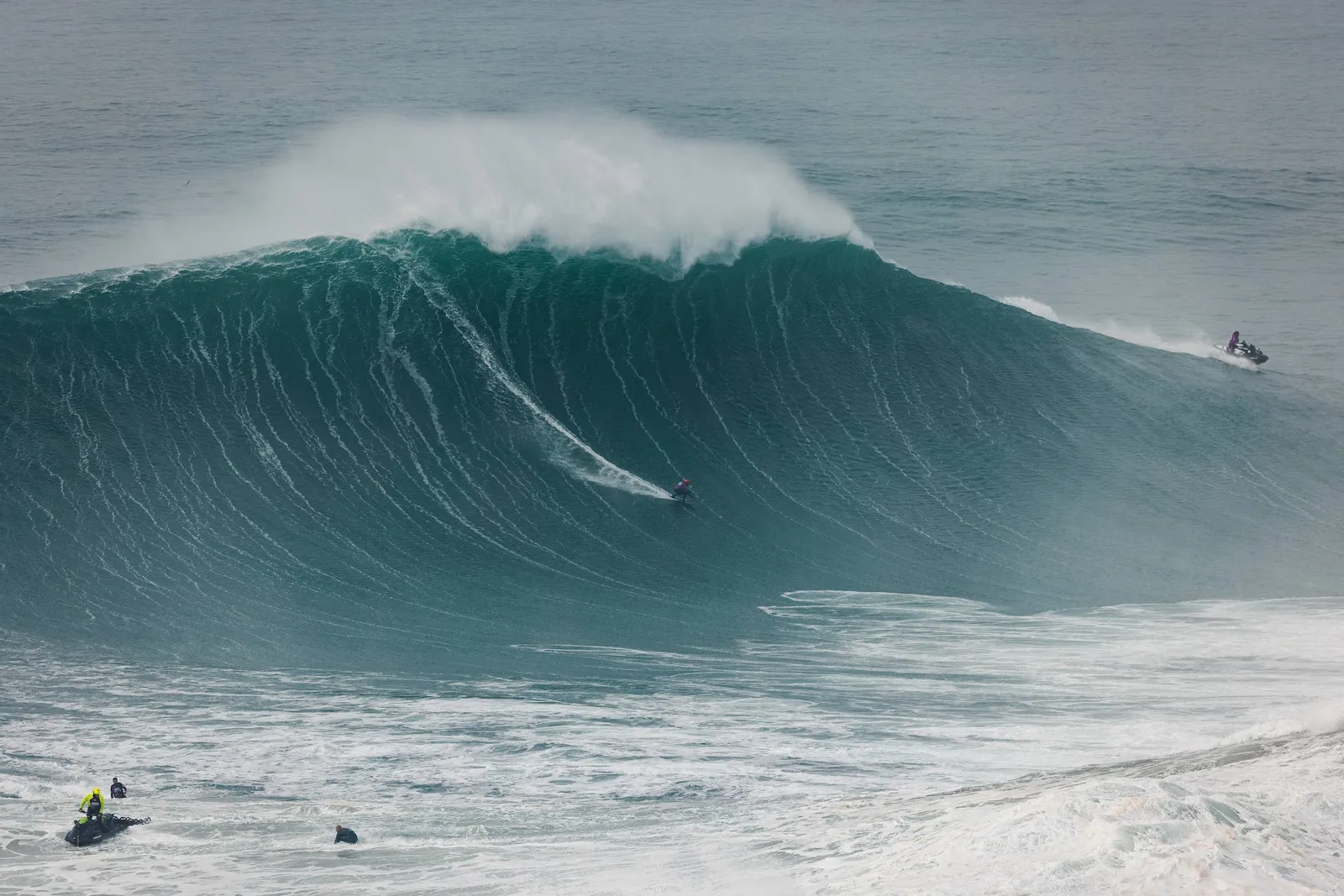 1 Nov – 31 Mar
TUDOR Nazaré Big Wave Challenge
A one-day tow-in team contest at Praia do Norte, called by the WSL with 24 to 48 hours notice when the forecast tops roughly 40 feet of face and the wind lines up.
Praia do NorteGuides
See more
A 7-day surf trip down the Silver Coast
The straightforward one-week route through the heart of Portuguese surf: Peniche and Baleal, then south to Ericeira, with Santa Cruz as the quiet card in the middle.
A long weekend surfing Ericeira
Three or four days in the World Surfing Reserve, no car needed, with a plan that scales from first lessons to the reefs.

A week surfing the Algarve
Base in Lagos or Sagres, chase the wind between two coastlines, and use the west-coast beaches when the south goes flat.